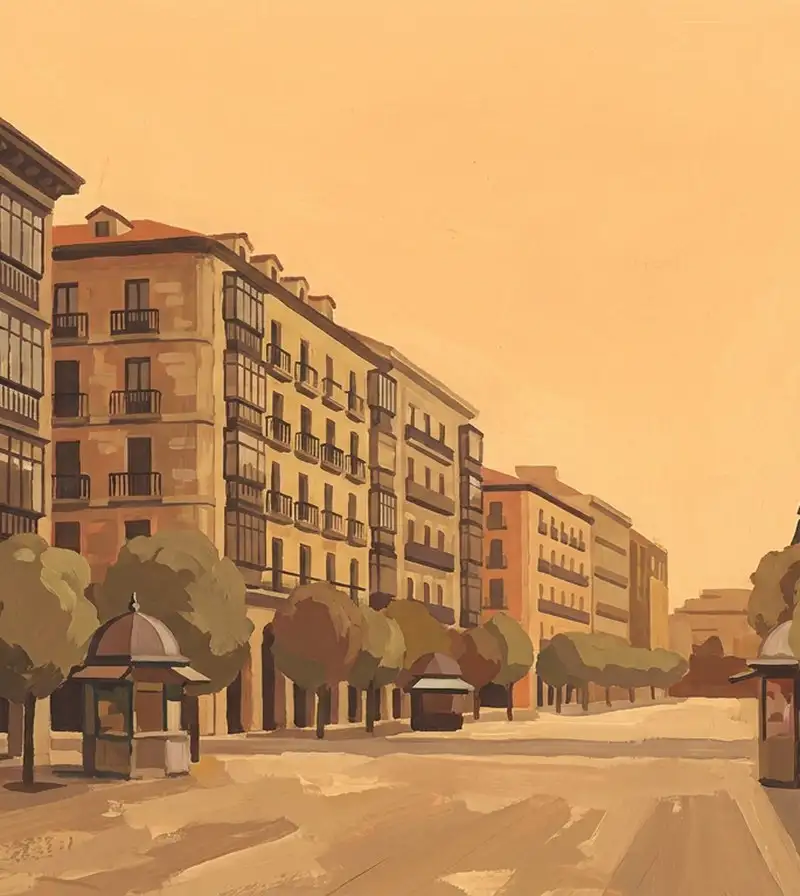
Centro
€3,122/m²Asking price, August 2026220.000 - 500.000 €Implied for a 70 to 160 m² homeThe nineteenth-century grid around the Paseo de la Independencia, with the main shops, cafés and offices, immediately south of the old town.
Central
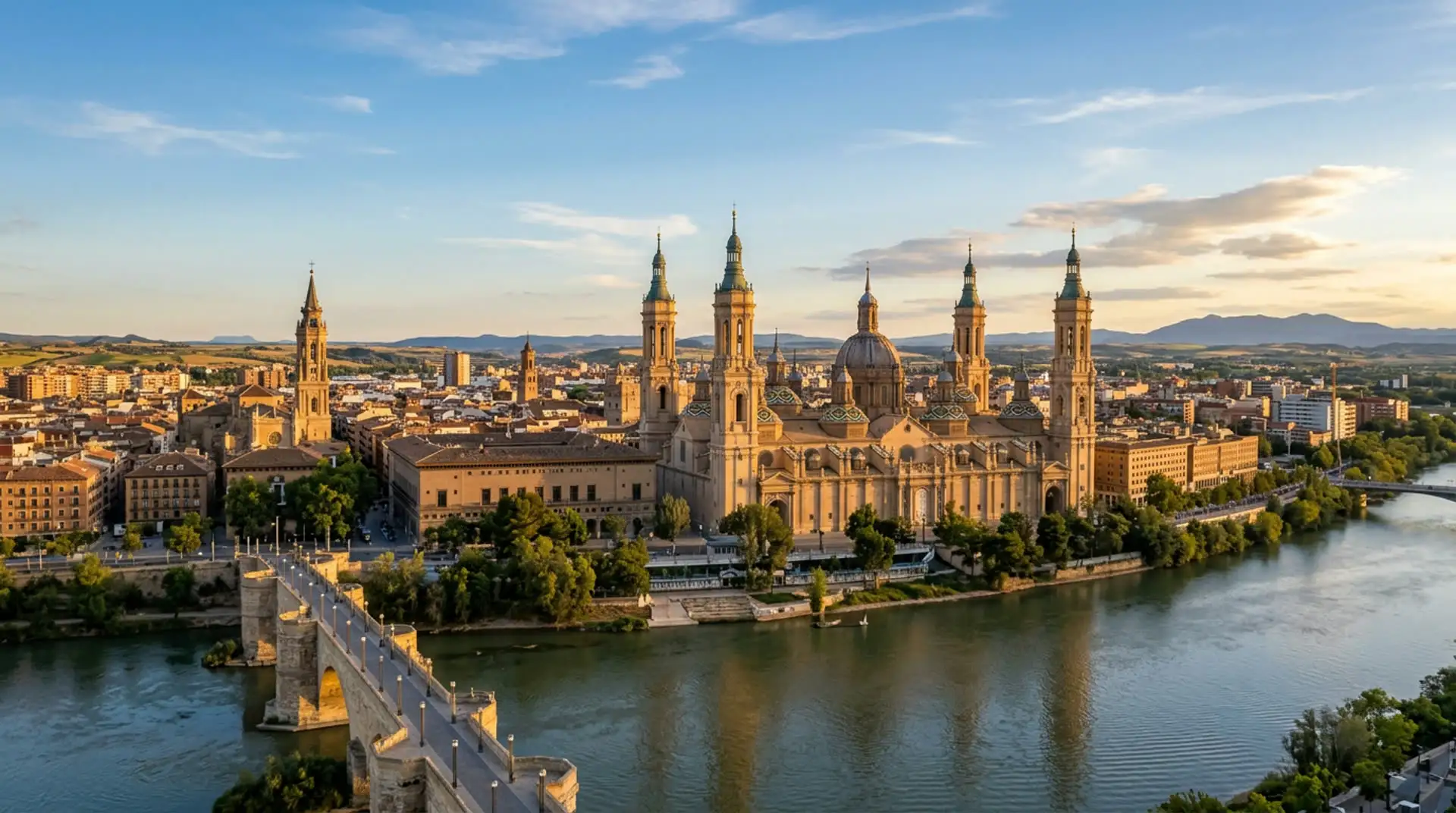
Zaragoza is an inland regional capital built around the Ebro, with a broad, level centre that makes everyday errands, evening walks and trips into the old town straightforward. The Casco Histórico and the Tubo keep the centre lively after work, while neighbourhoods beyond it offer a more residential pace. This feels like a working city first, not a place organised around seasonal visitors.
Its history is visible rather than confined to a museum. The Basílica del Pilar and La Seo anchor the riverfront, while the Aljafería brings Islamic palace architecture into the modern city. La Seo, the Aljafería and San Pablo form part of Aragón's UNESCO-listed Mudéjar heritage, giving buyers a centre where major monuments remain part of ordinary streets and routines.
Zaragoza-Delicias brings high-speed, long-distance and regional trains together with commuter rail and the bus station, making Madrid and Barcelona practical directions rather than distant reference points. Buyers trade the scale and coastal setting of Spain's larger destination cities for easier daily movement, strong rail access and a lower entry price, but they enter a housing market that is repricing quickly and varies sharply by district.
The verdict
The upside is real. So is the downside. Both matter more than any brochure will admit.
Monumental heritage is part of the centre
The Basílica del Pilar, La Seo and the Aljafería give the central city a distinctive historic identity, while the Tubo keeps the surrounding streets active in the evening.
The main station covers several kinds of journey
Zaragoza-Delicias brings high-speed, long-distance and regional trains together with commuter rail and the bus station.
A working city beyond tourism
Zaragoza functions as a large regional capital throughout the year, with residential districts, public services and employment spread beyond the historic centre.
The centre is easy to navigate on foot
A level urban core and a concentrated historic centre make many daily errands, monuments and evening destinations practical without a car.
The cierzo
The valley's north-westerly wind blows hard and cold through winter, and it shapes how the city feels far more than the temperature alone suggests.
No coast, and a long way to one
Zaragoza sits in the middle of the Ebro basin, with the nearest sea several hours away in any direction.
Summer heat and winter fog matter
The inland Ebro valley climate brings hot summer afternoons, winter frost and periods of fog, making shade, insulation, glazing and orientation worth checking.
The tram does not cover the whole city
Zaragoza has one tram line. Buyers who expect to use it regularly should check the exact route against the district they are considering.
The airport has a limited route network
Frequent flyers should check the current direct routes before relying on Zaragoza Airport for regular international travel.
Editor's note
Zaragoza suits buyers who want a full-sized Spanish city at a price well below Spain's two largest cities, with fast trains to both and no coast in any direction. Valladolid is the closest comparison, another inland capital on a river with rail to Madrid. Logroño is smaller, with wine country instead of scale. Bilbao offers a northern city with a coast and a bigger international airport. Sevilla is the large southern capital, warmer in winter and considerably hotter in summer.
station: Zaragoza Aeropuerto
Average 1981-2010 · AEMET
Updated 1 Aug 2026
INE Annual Population Census, nationality basis, 1 January 2025
Where to live and what to expect at each price point.
The nineteenth-century grid around the Paseo de la Independencia, with the main shops, cafés and offices, immediately south of the old town.
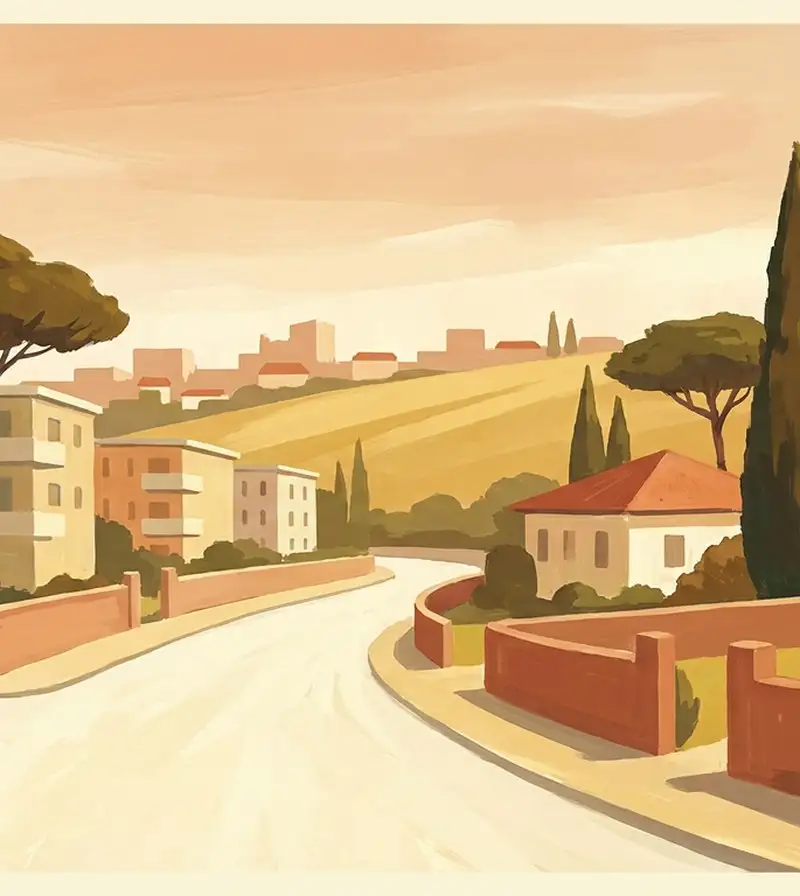
A leafy low-density residential district south of the centre, detached houses and quiet streets, traditionally among the city's most sought-after addresses.
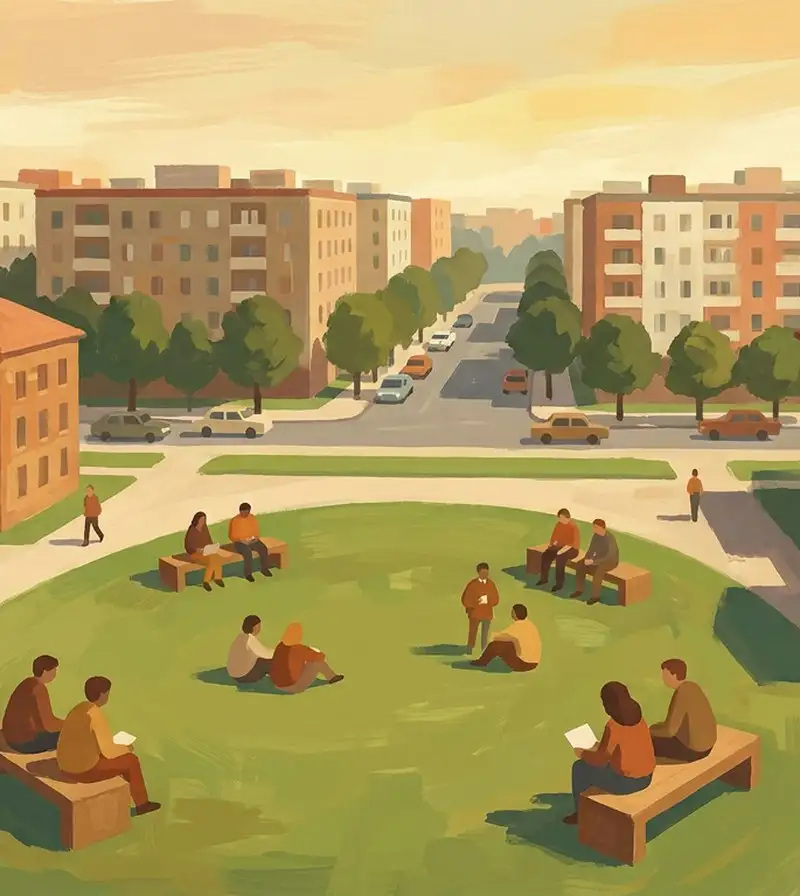
The university quarter south-west of the centre, with the main campus, student flats and the residential streets around them.
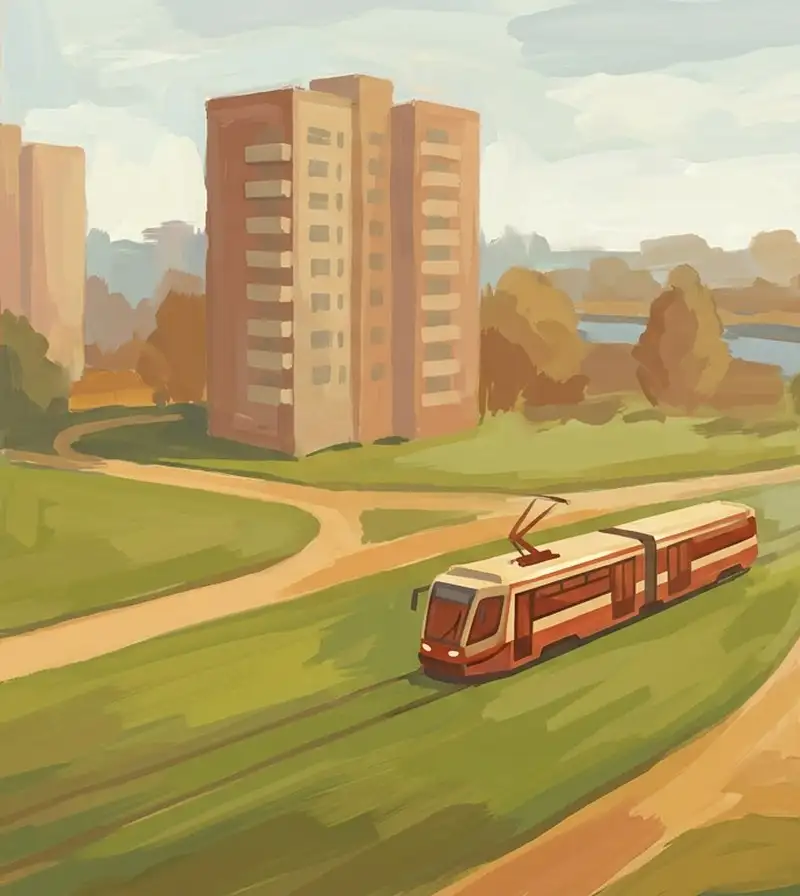
The planned district on the north bank of the Ebro, built from the 1980s with wide avenues, parks and the Expo site to the west.
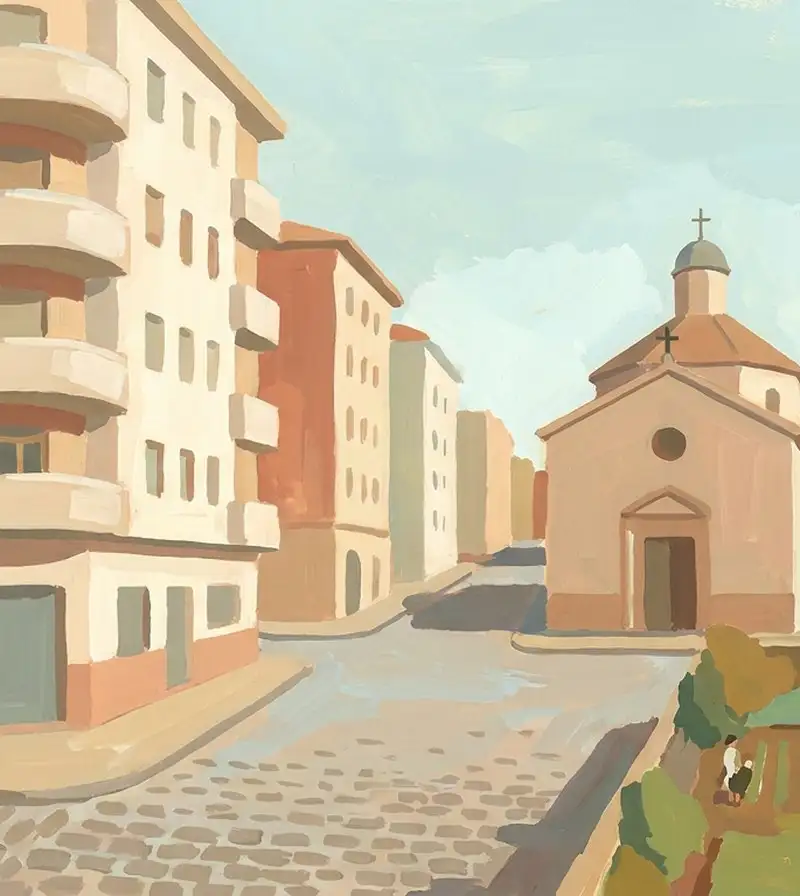
Established residential streets east of the centre, mid-century blocks with local shops and everyday services.
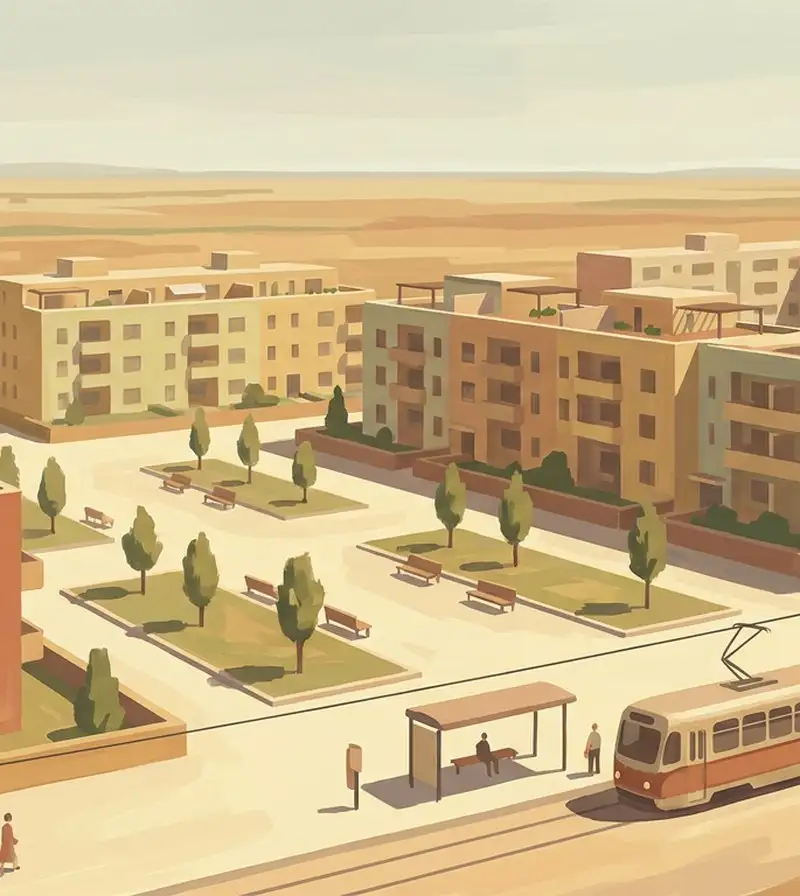
The newest districts on the southern edge, built this century with wide streets, newer blocks and family housing.
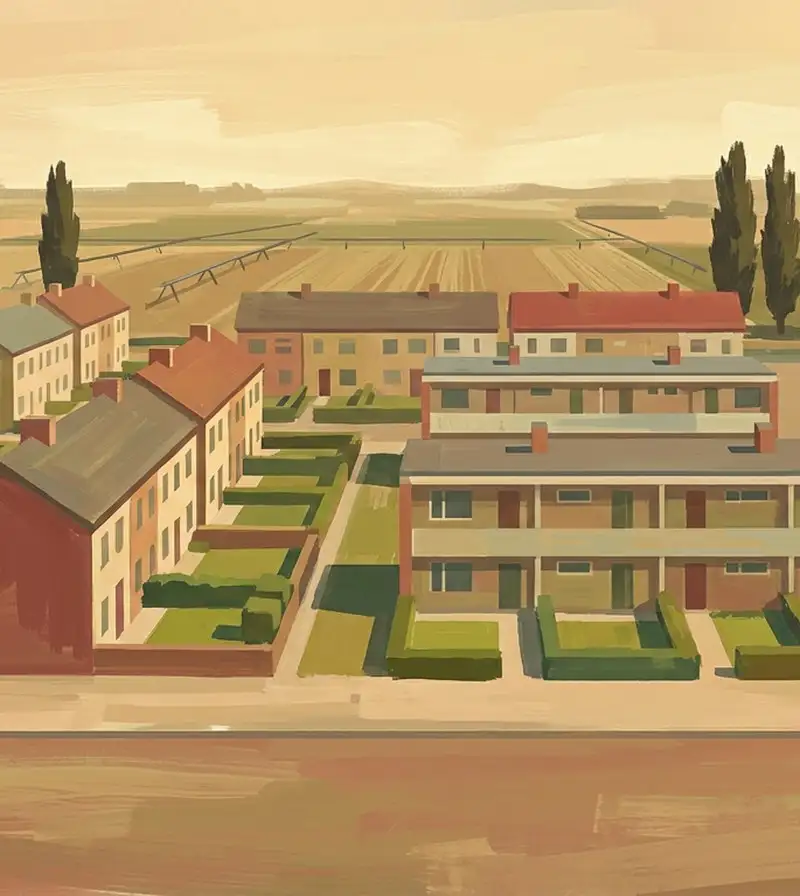
A western residential district of newer low-rise housing, quieter and more suburban than the districts nearer the centre.
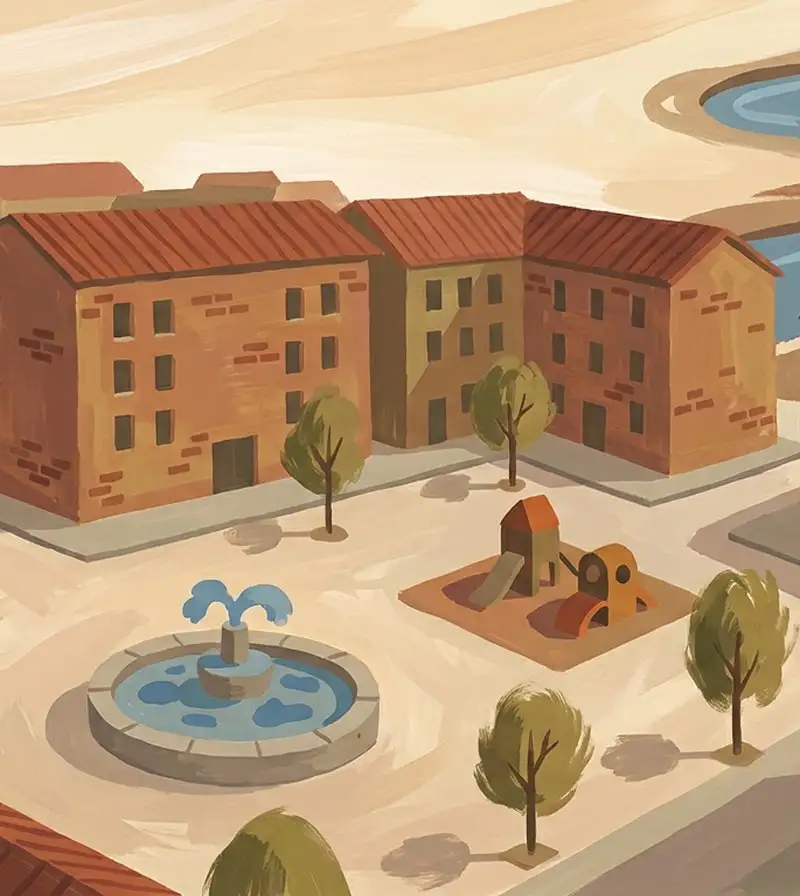
A residential district on the north bank of the Ebro, older blocks and local streets east of the Arrabal.
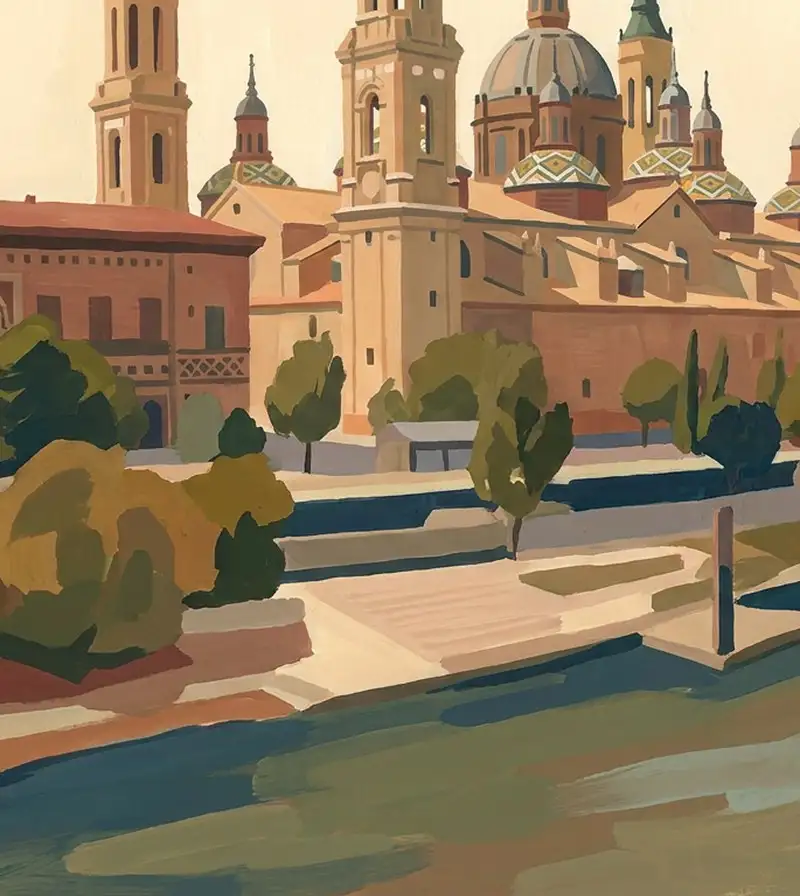
The old town: the Pilar, La Seo, the Roman remains, the Mudéjar churches and the tapas lanes of El Tubo, the most historic and the liveliest place to live.
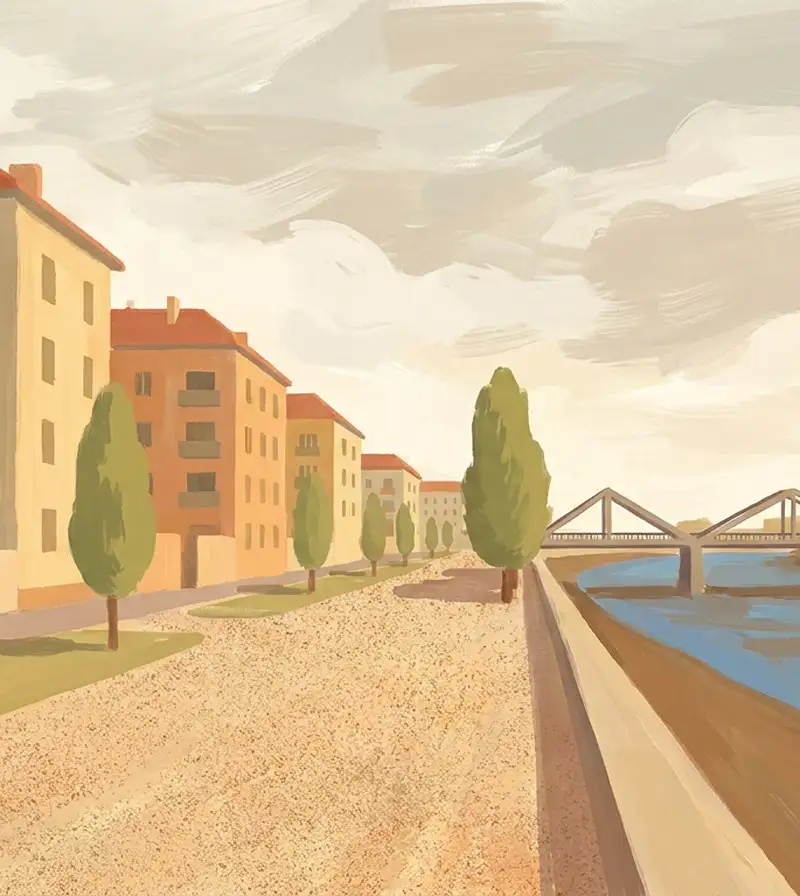
On the south bank west of the old town, facing the Expo site across the river, planned housing with the river park alongside.
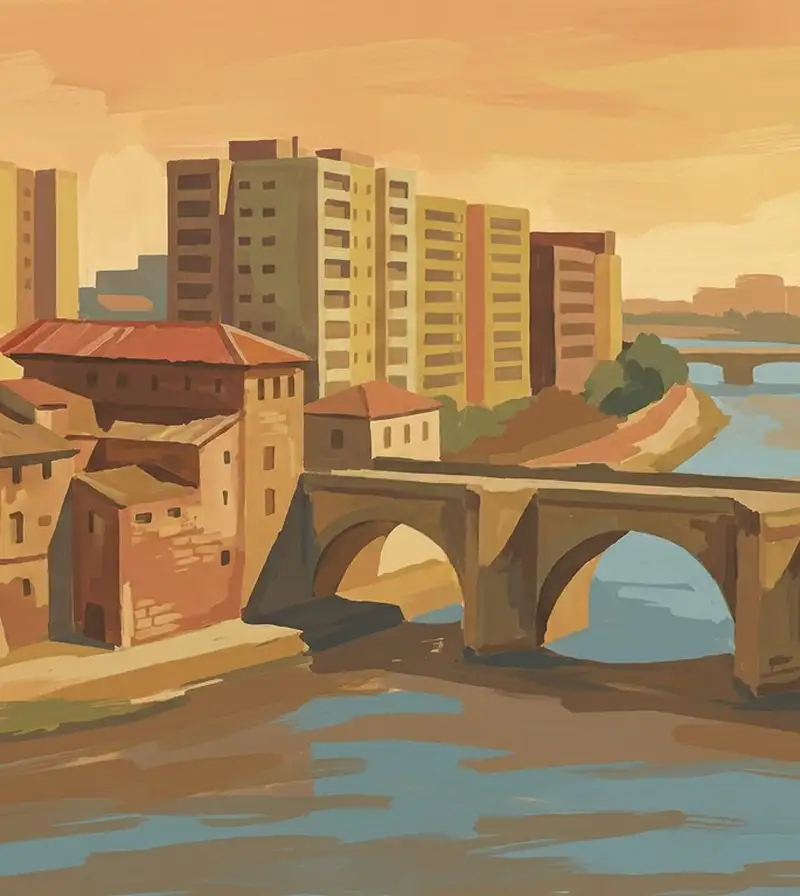
The old quarter on the far side of the Puente de Piedra, the north bank's historic core, now surrounded by later housing.
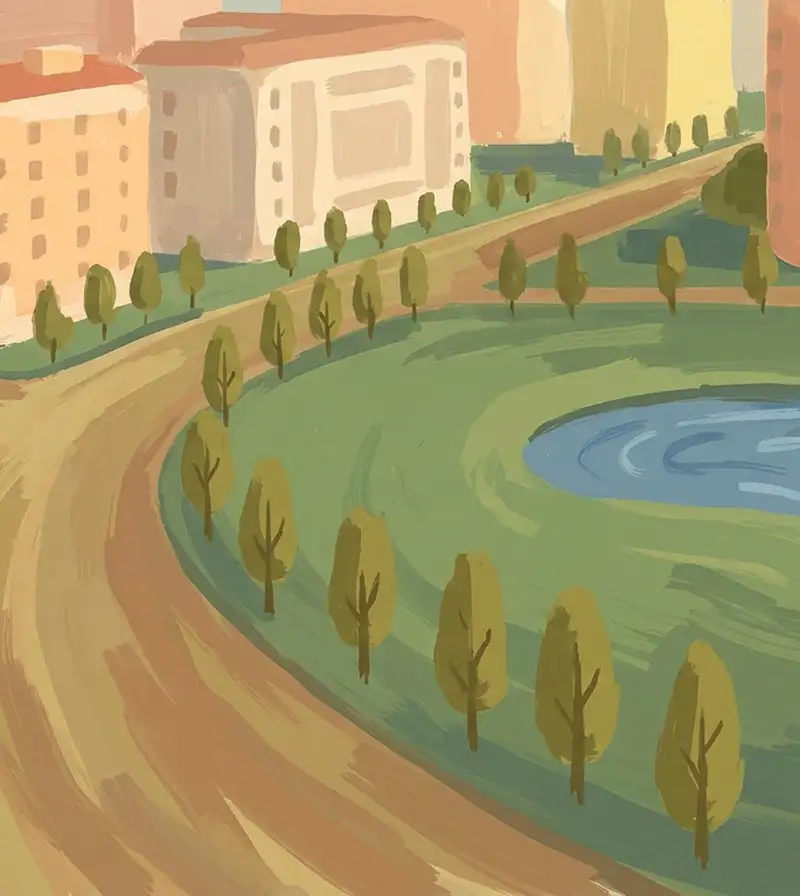
Newer estates on the northern edge, built around the Parque Goya, with wide streets and modern blocks.
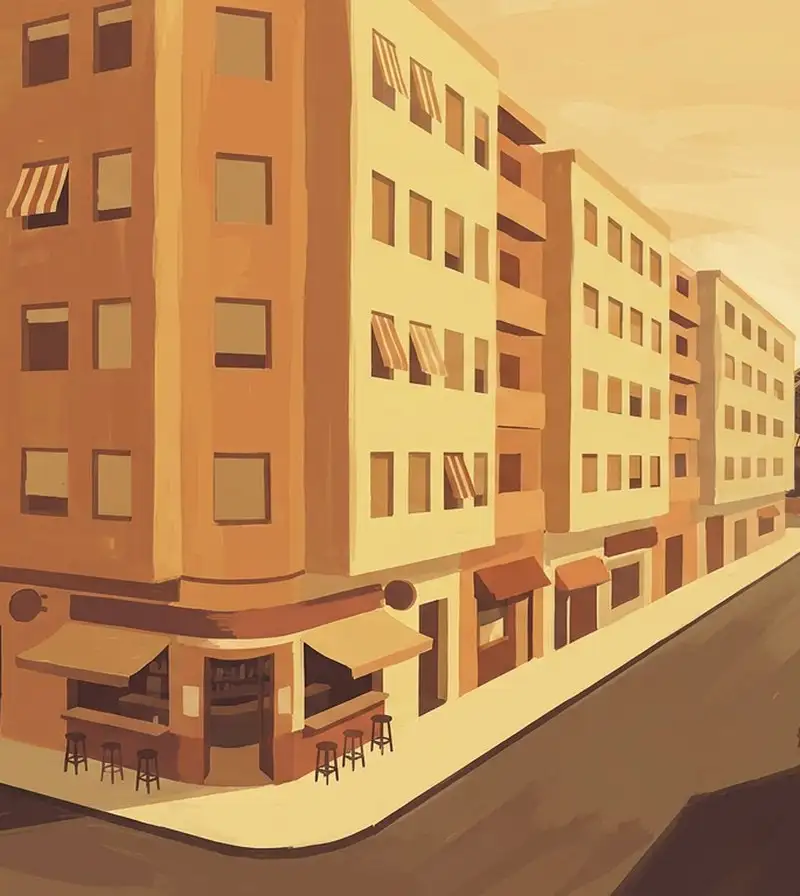
A dense western district of mid-century blocks near the main station, the most populous in the city and one of its most international.
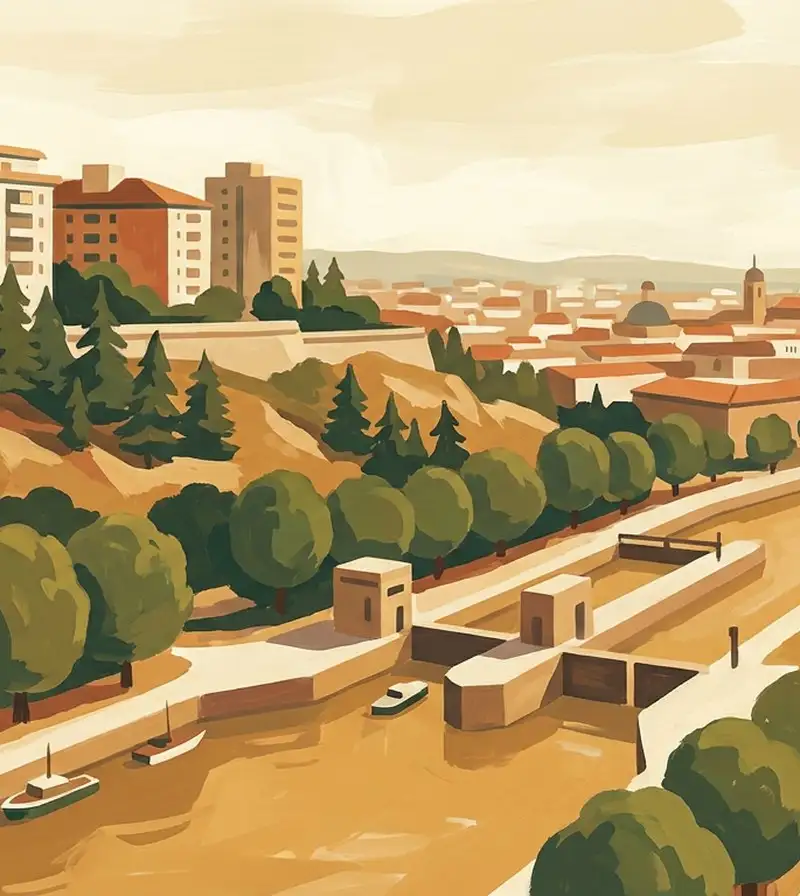
The southern hill above the Canal Imperial, with the pine woods of Pinares de Venecia at its edge and views back over the city.
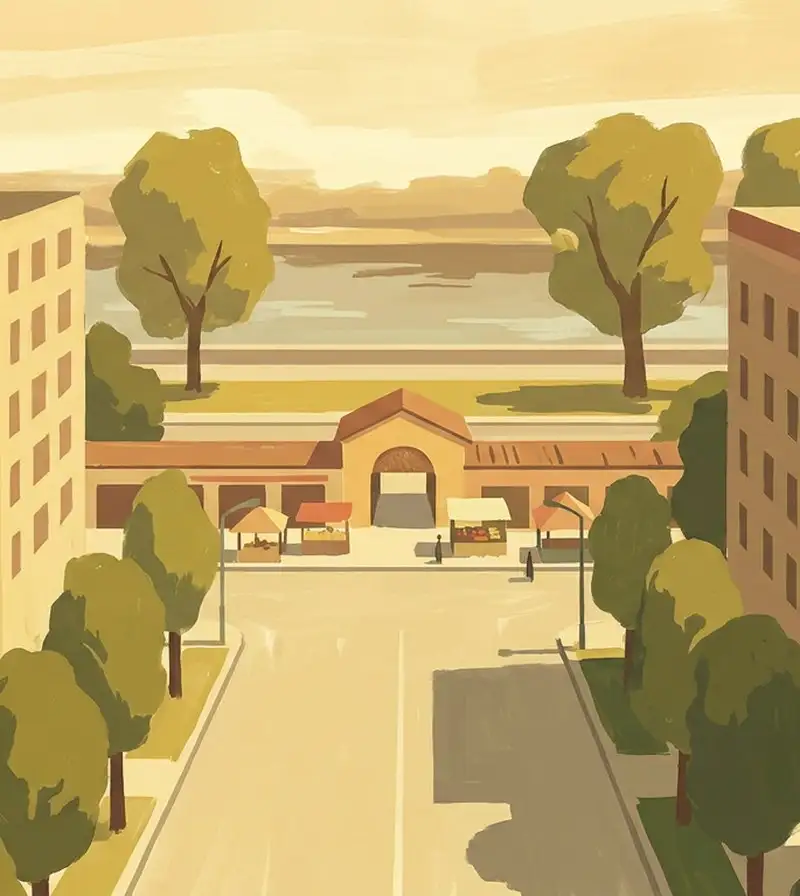
An eastern riverside district of 1960s blocks, close to the centre and the Ebro, with its own local shopping streets.
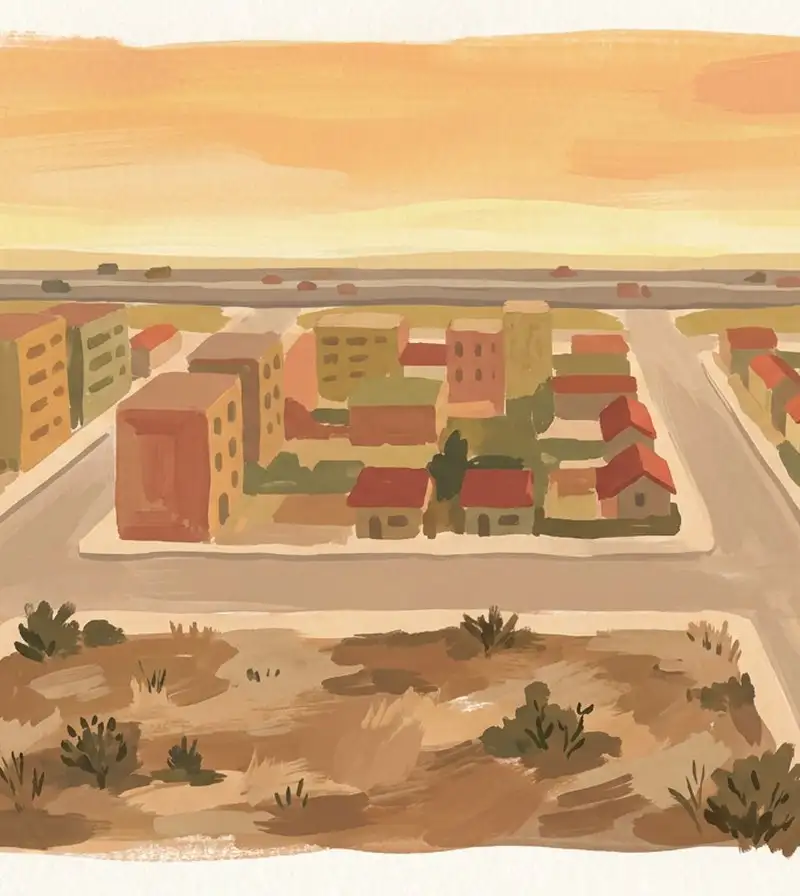
Two working districts of mid-century housing on the western edge of the city.
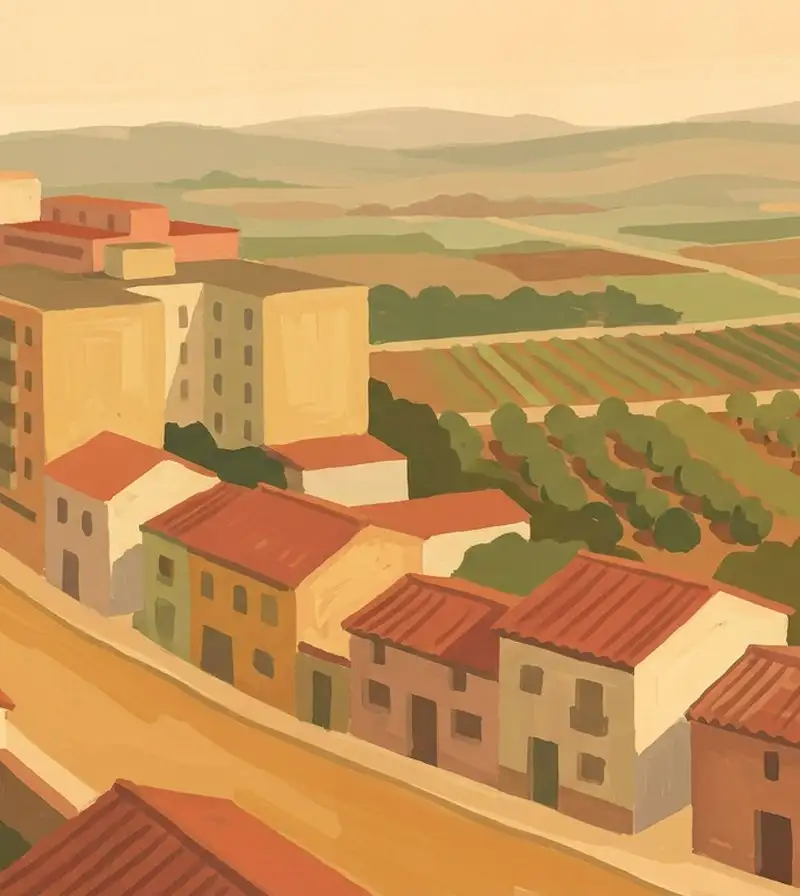
The north-eastern corridor along the Barcelona road, where the city thins into market gardens and the old villages of Santa Isabel and Movera.
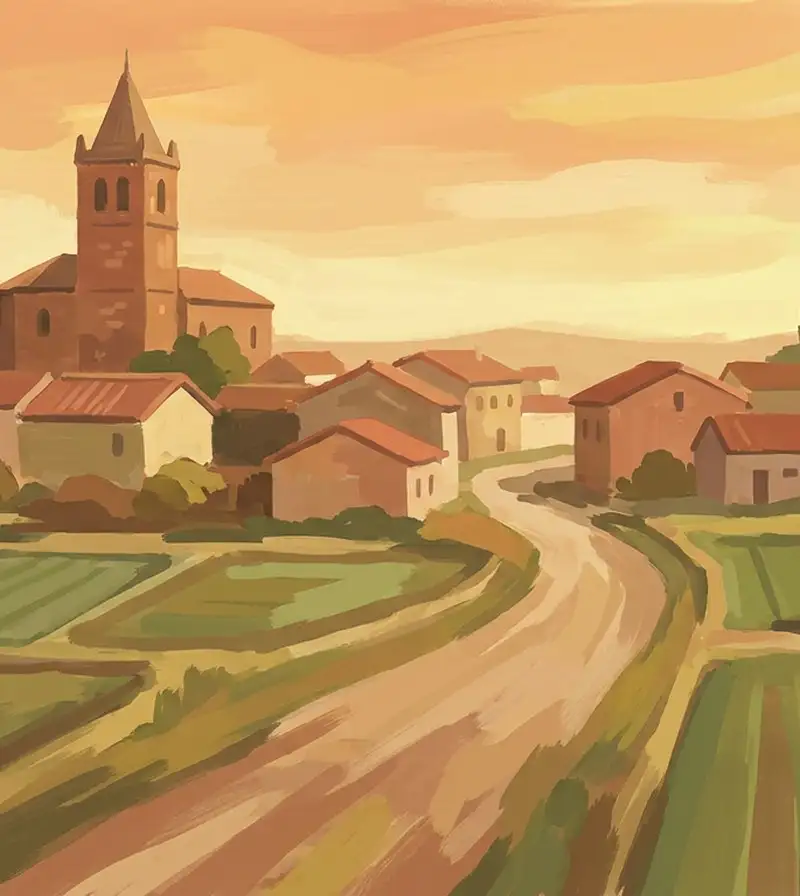
Outlying villages west of the city, part of the municipality but separate places with their own centres and open country between them.
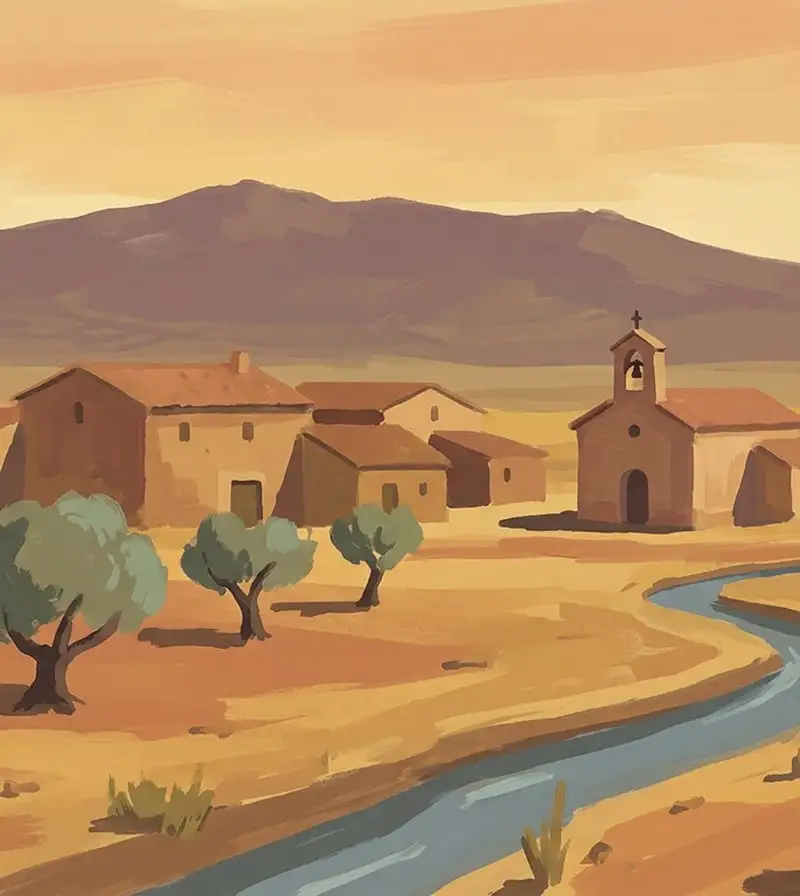
The northern rural quarters, including Juslibol, Alfocea and Peñaflor, villages inside the municipal boundary with farmland around them.
Honest answers to the questions buyers actually ask.
Transfer tax rates as of August 2026. Rates are set per autonomous community and do change. Confirm the current figures with a Spanish lawyer or tax adviser before you budget.
The pros and the cons of every town, with sourced data on prices, climate and costs.
Your property search, saved cities, mortgage calculator and a step-by-step buying guide, from your first search to getting the keys.
Local agents who speak your language, and owners selling their own home, contact you about homes that fit your search.
Agents and owners ask to connect first. Your contact details are only shared with the people you accept.
Our comprehensive guide covers everything foreign buyers need to know - from NIE numbers and residency permits to mortgages and legal requirements.
Use our free mortgage calculator to estimate monthly payments, compare loan scenarios and understand the true cost of buying in Spain.